At the novel’s opening
The Novel’s Claim
The narrator presents fiction as a place where truths can be brought into the light, then suggests that life has imitated the plot of [Serve the People](entity:rule-recall-rule-serve-the-people-48f3123c2cf6)!. The framing makes the story both a romance and a darkly comic inquiry into how political language shapes private lives.
During Wu Dawang’s service in the Commander’s household
The Sign Moves
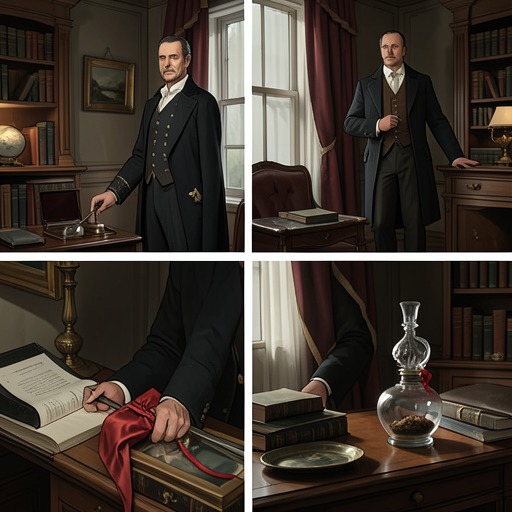
[Wu Dawang](entity:character-recall-character-wu-dawang-729264bc9423), a decorated catering sergeant newly assigned as the [Division Commander](entity:character-recall-character-dbe2e8c72f13)’s general orderly, sees the “[Serve the People](entity:rule-recall-rule-serve-the-people-48f3123c2cf6)!” sign moved from its usual place on the dining table to the kitchen worktop. He understands the sign’s revolutionary imagery as a lesson in history and Communist promise, but its new position also carries a private meaning he has not yet learned to read.
Six months before the affair begins
The Commander’s Household
The [Division Commander](entity:character-recall-character-dbe2e8c72f13) lives for revolution and work, while his much younger wife, Liu Lian, spends her days largely confined to their residence. [Wu Dawang](entity:character-recall-character-wu-dawang-729264bc9423) knows almost nothing about her, and his careful obedience to the army’s rules of silence and discretion pleases the Commander.
After Wu Dawang’s theory-and-practice competition
A Model Soldier’s Appointment
At a military competition, [Wu Dawang](entity:character-recall-character-wu-dawang-729264bc9423) recites [Mao Zedong](entity:character-recall-character-mao-zedong-921152bbba4e)’s writings, cooks an elaborate meal at speed, and earns another round of praise as a model soldier. The Commander selects him as his full-time orderly and cook, while the [Political Instructor](entity:character-recall-character-d8a590eed06b) reminds him that serving the Commander is to [Serve the People](entity:rule-recall-rule-serve-the-people-48f3123c2cf6).
Over Wu Dawang’s first six months in the household
Liu Lian Watches
While [Wu Dawang](entity:character-recall-character-wu-dawang-729264bc9423) works in the garden and kitchen, Liu Lian studies him from windows and through the Commander’s telescope. He remains unaware of her attention as the secluded compound becomes, in the narrator’s image, a landscape charged with unspoken desire.
Three days before the narrative present
The First Summons
After dinner, Liu Lian moves the sign onto the table and tells [Wu Dawang](entity:character-recall-character-wu-dawang-729264bc9423) that whenever it is absent from its usual place, he must come upstairs. She knocks it meaningfully against the table before retiring, but he returns it to its proper place and continues his chores, missing the invitation.
Later that same evening
The Darkened Bedroom
The sign is at the foot of the stairs, and [Wu Dawang](entity:character-recall-character-wu-dawang-729264bc9423) climbs toward the bedroom despite the Commander's warning not to go upstairs when his wife is absent. He calls out, receives permission to enter, and finds Liu Lian sitting in the dark with a volume of "Selected Works of Mao
During Wu Dawang’s first visit upstairs
The Light Cord
Liu Lian asks [Wu Dawang](entity:character-recall-character-wu-dawang-729264bc9423) to untangle the bedside light cord. Once he turns on the light, he sees the familiar room and its revolutionary decorations, then struggles to express his admiration without resorting to slogans and political clichés.
During the first bedroom conversation
Sister Instead of Aunt
Liu Lian objects to being called Aunt and asks [Wu Dawang](entity:character-recall-character-wu-dawang-729264bc9423) to call her Sister when they are alone. Moved by the invitation yet intimidated by their difference in status, he cannot bring himself to say the word at first.
During the same visit
The Nightgown Revealed
When [Wu Dawang](entity:character-recall-character-wu-dawang-729264bc9423) finally looks up, he sees Liu Lian in a loose silk nightgown, its hem stirred by an electric fan. He struggles to master his desire by reminding himself that she is the Commander’s wife and that his own revolutionary duty is to know what he should and should not do.
During the first private conversation
Liu Lian’s Questions
Liu Lian asks about [Wu Dawang](entity:character-recall-character-wu-dawang-729264bc9423)’s marriage, his ambitions, and his feelings for his wife. He admits that he wants promotion and to bring his family to the city; when pressed, he describes marriage as a lifelong duty of care rather than claiming to know whether he feels love.
At the end of the first visit
The Daily Washing
Before dismissing him, Liu Lian asks whether [Wu Dawang](entity:character-recall-character-wu-dawang-729264bc9423) washes every night and repeats that the displaced sign is a summons. He descends to the kitchen and douses his face with cold water, unsettled by the encounter but still unable to understand what she intends.
Three days after the first bedroom visit
The Second Summons
Back in the narrative present, [Wu Dawang](entity:character-recall-character-wu-dawang-729264bc9423) finds the sign on the kitchen worktop and drops the vegetables he has just carried in. He senses that a dangerous entanglement is approaching, yet his apprehension mingles with a desire he cannot simply refuse.
That evening
Liu Lian’s Anger
Liu Lian has watched [Wu Dawang](entity:character-recall-character-wu-dawang-729264bc9423) stand motionless before the sign, and she angrily accuses him of wasting her summons. He gathers the vegetables, washes the dirt from his hands, and follows her upstairs, addressing her as Sister for the first time.
That evening, after Wu Dawang calls her Sister
The First Naked Advance
Liu Lian asks whether [Wu Dawang](entity:character-recall-character-wu-dawang-729264bc9423) has washed, then orders him to put the sign back, lock the gate, shower, and return. He scrubs himself carefully, changes into clean clothes, and hurries back upstairs, increasingly conscious that he is choosing to participate in the encounter.
Later that night
Darkness and Hesitation
[Wu Dawang](entity:character-recall-character-wu-dawang-729264bc9423) enters Liu Lian’s dark bedroom, where she lies waiting on the bed. Though he has yearned for her, he cannot move toward her and repeatedly asks her to turn on the light, turning the seduction into an awkward standoff.
Immediately afterward
The Bright Room
Liu Lian switches on the light, revealing herself naked beneath the mosquito net. [Wu Dawang](entity:character-recall-character-wu-dawang-729264bc9423) remains frozen and admits that he fears the [Division Commander](entity:character-recall-character-dbe2e8c72f13) and the Party; Liu Lian, disappointed by his paralysis, dresses and tells him he is not worth the mud in the walls.
Later that night
The Instructor’s Rebuke
On the drill ground, [Wu Dawang](entity:character-recall-character-wu-dawang-729264bc9423) weighs Liu Lian’s body against the danger of being discovered and decides that he must defend his honor as a soldier. The [Political Instructor](entity:character-recall-character-d8a590eed06b) then reports that Liu Lian has complained about him and threatens his post, turning the failed seduction into an immediate professional crisis.
The same night
The Political Lecture
The [Political Instructor](entity:character-recall-character-d8a590eed06b) lectures [Wu Dawang](entity:character-recall-character-wu-dawang-729264bc9423) about imperialism, war, military readiness, and the duty to look after the Commander’s wife. He points out that Liu Lian may be the person who can help Wu Dawang secure promotion and bring his family to the city, then gives him one more day to repair the situation.
Six years before the affair
Wu Dawang’s Village Origins
The narrative turns back to [Wu Dawang](entity:character-recall-character-wu-dawang-729264bc9423)’s youth in [Wujiagou](entity:location-recall-location-wujiagou-1bcf4cc24a7f), a poor mountain village where he worked the fields after losing his father. His mother had kept him in school until sixteen, enabling him to become his production team’s accountant.
When Wu Dawang is twenty-two
Accountant Zhao Notices Him
At a commune meeting, [Wu Dawang](entity:character-recall-character-wu-dawang-729264bc9423) helps [Accountant Zhao](entity:character-recall-character-c65793b2c7a7) copy a list of attendees. Impressed by the young man’s education, handwriting, and unmarried status, Zhao sees him as a possible match for his daughter and a route into the army and officialdom.
Before Wu Dawang joins the army
The Marriage Bargain
[Accountant Zhao](entity:character-recall-character-c65793b2c7a7) promises to arrange for [Wu Dawang](entity:character-recall-character-wu-dawang-729264bc9423) to enter the army, explaining that military advancement could make it possible for his daughter [Zhao Ezi](entity:character-recall-character-a513b918bbfa) to obtain an urban residence and a better life. Wu Dawang accepts the prospective marriage as part of that arrangement.
Toward the end of that year
Wu Dawang Joins the Army
[Wu Dawang](entity:character-recall-character-wu-dawang-729264bc9423) leaves his village for military service. Army food, clothing, and housing feel like extraordinary prosperity to a peasant accustomed to scarcity, and his diligence in work and political study helps him become a trusted, ambitious soldier.
After Wu Dawang’s first year of service
His Mother’s Last Request
[Wu Dawang](entity:character-recall-character-wu-dawang-729264bc9423)’s mother falls ill with cirrhosis and summons him home to her deathbed. She asks him to marry in the village so that a daughter-in-law will be there to tend her grave.
During the visit to his dying mother
The Written Pledge
[Accountant Zhao](entity:character-recall-character-c65793b2c7a7) refuses to approve the marriage unless [Wu Dawang](entity:character-recall-character-wu-dawang-729264bc9423) can offer a future for [Zhao Ezi](entity:character-recall-character-a513b918bbfa). Wu Dawang kneels and promises to earn commendations, join the Party, become an official, and bring her to the city; he writes the vow down as the [Wu Dawang and Zhao Ezi’s Premarital Pledge](entity:object-recall-object-56ffc8b14bb5).
Soon after the pledge is written
The Wedding Night Bargain
[Wu Dawang](entity:character-recall-character-wu-dawang-729264bc9423) and [Zhao Ezi](entity:character-recall-character-a513b918bbfa) marry, and his mother dies shortly afterward. On their wedding night, Ezi asks him to promise again that he will pursue commendations and official status, and only then allows their marriage to be consummated.
On the wedding night
Love Gives Way
[Wu Dawang](entity:character-recall-character-wu-dawang-729264bc9423) and [Zhao Ezi](entity:character-recall-character-a513b918bbfa) have sex after she secures his renewed promise. From then on, she treats intimacy as a reward for his progress and a means of achieving her future in the city, while he experiences the transaction as the beginning of a loveless marriage.
During Wu Dawang’s early army career
The Catering Squad Opening
After failing to win quick advancement, [Wu Dawang](entity:character-recall-character-wu-dawang-729264bc9423) competes for a vacant catering post. He wins the [Political Instructor](entity:character-recall-character-d8a590eed06b)’s favor by serving the officer’s son as a playful human horse and insisting that practical service gives meaning to the slogan.
In the year and a half before his household appointment
Promotion and Party Membership
[Wu Dawang](entity:character-recall-character-wu-dawang-729264bc9423) becomes catering sergeant, joins the Party, and earns commendations with help from the [Political Instructor](entity:character-recall-character-d8a590eed06b). Becoming an official remains the one part of his pledge that he has not fulfilled, so his transfer to the Commander’s household seems to bring his ambition within reach.
During Wu Dawang’s marriage
A Child in the Village
[Wu Dawang](entity:character-recall-character-wu-dawang-729264bc9423) and [Zhao Ezi](entity:character-recall-character-a513b918bbfa) have a son. A letter from Ezi describes harvesting wheat, cutting her hand, and leaving the child tied in the shade while she works; the boy nearly chokes after putting a locust in his mouth.
The night after Wu Dawang’s failed advance
The Dream of Liu Lian
[Wu Dawang](entity:character-recall-character-wu-dawang-729264bc9423) lies awake, then dreams of Liu Lian and wakes ashamed. Rereading Ezi’s letter about their son’s near accident, he feels the pull of family duty but decides that simply resisting Liu Lian may cost him the promotion and urban future he has pursued.
The following dawn
A Return to the House
[Wu Dawang](entity:character-recall-character-wu-dawang-729264bc9423) resolves to repair his standing with Liu Lian and returns to the Commander’s household. On the way, his Captain makes him shout the principle that serving the Commander and his family is serving the people, turning the slogan into both a public duty and a private pretext.
The morning after the failed advance
Liu Lian in Uniform
[Wu Dawang](entity:character-recall-character-wu-dawang-729264bc9423) finds Liu Lian awake before reveille and dressed in her long-stored army uniform. She refuses his offer to make her usual breakfast and tells him to boil eggs before returning to barracks, her exhausted appearance signaling how deeply his rejection has affected her.
Later that morning
The Self-Criticism
[Wu Dawang](entity:character-recall-character-wu-dawang-729264bc9423) prepares sweet egg soup and writes a self-criticism admitting that he has misunderstood what it means to [Serve the People](entity:rule-recall-rule-serve-the-people-48f3123c2cf6). Liu Lian says she wants him removed from the household and plans to have him discharged at year’s end, making clear that his attempt at reconciliation has not yet won her back.
During the morning confrontation
Wu Dawang Kneels
Terrified that his prospects are collapsing, [Wu Dawang](entity:character-recall-character-wu-dawang-729264bc9423) falls to his knees and begs Liu Lian for another chance. He promises to do whatever she wants, and she tests his sincerity by ordering him to run naked around the drill ground.
Immediately afterward
The Slogan Shirt
Liu Lian orders [Wu Dawang](entity:character-recall-character-wu-dawang-729264bc9423) to remove his clothes in the name of serving the people. His undershirt bears the slogan, and as he undresses the political language that has governed their lives becomes part of their erotic exchange.
That morning
The Affair Begins
[Wu Dawang](entity:character-recall-character-wu-dawang-729264bc9423) takes off his trousers while Liu Lian urges him onward with the repeated slogan. Their mutual desire finally overtakes his fear and hesitation, beginning the affair between the orderly and the Commander’s wife.
Flashback to Wu Dawang and Zhao Ezi’s wedding night
The Marriage’s First Failure
The narrative returns to the first night of [Wu Dawang](entity:character-recall-character-wu-dawang-729264bc9423)’s marriage. Ezi questions whether a good soldier should touch her so roughly, and their tentative intimacy stalls as Wu Dawang senses that the love described in books will be absent from their union.
Later on the wedding night
Ezi’s Conditions
After [Wu Dawang](entity:character-recall-character-wu-dawang-729264bc9423) returns to bed, Ezi says she will accept him only if he promises to bring her an army uniform, earn commendations, and become an official so she can move to the city. He kneels and repeats his oath, and they consummate their marriage under its terms.
During the years of separation after the wedding
Intimacy as Reward
For the rest of their married visits, [Zhao Ezi](entity:character-recall-character-a513b918bbfa) allows [Wu Dawang](entity:character-recall-character-wu-dawang-729264bc9423) to initiate sex but often reminds him to work hard for promotion at the moment of climax. The ritual confirms how ambition and obligation have displaced tenderness in their marriage.
The first weeks of the affair
Two Months of Passion
Compared with his marriage, [Wu Dawang](entity:character-recall-character-wu-dawang-729264bc9423)’s encounters with Liu Lian seem to prove that love exists. They meet frequently, and each becomes absorbed in the affair’s physical intensity, though neither recognizes how desire is beginning to overwhelm ordinary judgment.
Soon after the affair begins
A New Household Routine
Liu Lian tells [Wu Dawang](entity:character-recall-character-wu-dawang-729264bc9423)’s superiors that he has improved and that she wants him to remain in the house at night while the Commander is away. Their superiors approve, treating the arrangement as a matter of service and discipline while the lovers conceal their relationship behind the orderly’s routine duties.
Throughout the affair
The Sign Becomes a Signal
Liu Lian uses the sign to summon [Wu Dawang](entity:character-recall-character-wu-dawang-729264bc9423) from the garden, the kitchen, or elsewhere in the compound. Their private code lets them move between official roles and erotic play, until they increasingly forget that the affair began under a public facade.
Early in the affair
A Shared Breakfast
After a night together, [Wu Dawang](entity:character-recall-character-wu-dawang-729264bc9423) wakes to find Liu Lian preparing and feeding him egg soup. She calls it her turn to [Serve the People](entity:rule-recall-rule-serve-the-people-48f3123c2cf6), turning the slogan into a language of mutual care and pleasure rather than a command from the military hierarchy.
During the affair’s early weeks
Liu Lian Faints
As [Wu Dawang](entity:character-recall-character-wu-dawang-729264bc9423) admires Liu Lian, she becomes dizzy and faints from excitement. He carries her to a cool spot, recalls his wife and child, and briefly imagines that Liu Lian’s death might free him from the impossible life he has entered; she soon wakes and reassures him.
After Liu Lian recovers
The Commander’s Impotence
Liu Lian tells [Wu Dawang](entity:character-recall-character-wu-dawang-729264bc9423) that the Commander’s first wife divorced him because he is impotent. She admits that the Commander selected her during a hospital inspection and that she married him willingly, drawn by his status and revolutionary record despite learning the truth only afterward.
During the same conversation
A Promise of Promotion
Liu Lian asks why [Wu Dawang](entity:character-recall-character-wu-dawang-729264bc9423) wants to become an official and offers to help move his family to the city when promotions resume. She tells him that she is his Sister and says she understands his wish to improve his family’s circumstances.
Later that day
A Mao-Tai Celebration
Liu Lian and [Wu Dawang](entity:character-recall-character-wu-dawang-729264bc9423) cook together, trade Mao-era slogans, and compete over the meal. She brings out a bottle of mao-tai, and they drink to the life he has made worthwhile for her.
During the drinking
Liu Lian’s Story
Liu Lian recounts her marriage to the Commander: she had been proud to be chosen, knew his revolutionary credentials, and had recited [Mao Zedong](entity:character-recall-character-mao-zedong-921152bbba4e) quotations to him, but did not know of his impotence. As the drinking and singing continue, the pair lose track of the number of cups and songs.
At dusk after the drinking
The Drunken Embrace
[Wu Dawang](entity:character-recall-character-wu-dawang-729264bc9423) and Liu Lian wake on the kitchen floor amid scattered dishes, clothes, and an empty bottle. The sign lies across their bodies like a price tag, binding their private relationship to the revolutionary object that has served as its emblem.
Shortly before the final week of the affair
The Division Goes to Camp
The Division prepares for camp and field training amid posters urging readiness for war and disaster. [Wu Dawang](entity:character-recall-character-wu-dawang-729264bc9423), distracted by the life he shares with Liu Lian, realizes only when troops pass him that his company has already departed and that he has been left behind by special order.
The day the Division departs
The Permit to Stay
[Wu Dawang](entity:character-recall-character-wu-dawang-729264bc9423) retrieves a permit from his company office. It contains only the instruction to remember that serving the Commander’s family is serving the people, leaving him isolated in the abandoned barracks and reminding him that even his private refuge remains a military assignment.
During the Division’s camp-and-field training
The Thirty Yuan
[Wu Dawang](entity:character-recall-character-wu-dawang-729264bc9423) buys supplies for the household and sends thirty yuan to his wife, far more than his usual remittance. He has accumulated the money by slightly overcharging the household’s purchases, a small embezzlement he uses to ease his conscience about continuing the affair.
During the same period
The Orderly’s False Confidence
After a sentry points out bird droppings on his cap, [Wu Dawang](entity:character-recall-character-wu-dawang-729264bc9423) first invokes his status as a model soldier, then happily identifies himself as the Commander’s orderly. The affair has begun to make him imagine that he is the master of the household rather than its subordinate.
During the final week before the Commander’s return
Wu Dawang Gives an Order
When Liu Lian returns from shopping, [Wu Dawang](entity:character-recall-character-wu-dawang-729264bc9423) hands her his uniform and tells her to wash it, speaking as he might to his own wife. Liu Lian refuses and points to the sign, reminding him of his actual place in the household and exposing the hierarchy beneath their private game.
Immediately after Wu Dawang’s order
The Quotation Frame Breaks
[Wu Dawang](entity:character-recall-character-wu-dawang-729264bc9423) follows Liu Lian upstairs, and in the struggle a framed Mao quotation falls and its glass breaks beneath his foot. He blames Liu Lian for summoning him, while she realizes that he has taken her gesture as a sexual signal; the encounter opens into his suppressed anger at the hierarchy around them.
At midday during the final week
Rage in the Bedroom
[Wu Dawang](entity:character-recall-character-wu-dawang-729264bc9423) carries Liu Lian to the bed and makes love to her with an aggression he experiences as revenge against an oppressor. She responds with intense pleasure, but afterward they lie exhausted and acknowledge that their behavior has made them feel like animals.
Immediately after the broken quotation frame
The Three-Day Lock-In
Liu Lian shuts and padlocks the compound gates, and the lovers agree to stay inside for three days and three nights. With the Division away and the neighboring compounds empty, they turn the house into a sealed private world governed by desire rather than military routine.
The afternoon of the third day
The Lovers Tire
After days of constant sex, [Wu Dawang](entity:character-recall-character-wu-dawang-729264bc9423) and Liu Lian become physically and psychologically exhausted. They try to revive their desire through different positions and moods, but their efforts fail, and Wu Dawang begins to look for ordinary work in the garden.
The afternoon of the third day
The Mao Statue Falls
As [Wu Dawang](entity:character-recall-character-wu-dawang-729264bc9423) reaches for his uniform, a plaster statue of [Mao Zedong](entity:character-recall-character-mao-zedong-921152bbba4e) falls from the wardrobe and shatters. Liu Lian rushes to call Security, treating the accident as a political catastrophe that could expose their affair and destroy Wu Dawang.
Immediately after the statue breaks
Wu Dawang Stops the Call
[Wu Dawang](entity:character-recall-character-wu-dawang-729264bc9423) grabs the telephone from Liu Lian and prevents her from reaching Security. He tramples the fragments, including Mao’s head, and calls her a heartless traitor; rather than recoiling, she watches him with heightened excitement.
Immediately after the confrontation
The Statue as a Trap
Liu Lian reveals that she had placed the statue beneath [Wu Dawang](entity:character-recall-character-wu-dawang-729264bc9423)’s clothes, knowing it would fall when he got dressed. The staged accident has drawn out his rage and desire; he kisses her, apologizes for his insult, and the two recognize that their passion has awakened a fragile capacity for love.
Late on the third day
The Marriage Proposal
With tears on both their faces, Liu Lian asks [Wu Dawang](entity:character-recall-character-wu-dawang-729264bc9423) whether he would marry her. He says yes, but she explains that leaving the Commander is impossible because he is the [Division Commander](entity:character-recall-character-dbe2e8c72f13); she promises instead to help secure Wu Dawang’s promotion and his family’s move to the city.
Later that afternoon
A Test of Devotion
[Wu Dawang](entity:character-recall-character-wu-dawang-729264bc9423) insists that he will never forget Liu Lian, whether or not she helps him. To prove that their commitment is mutual, she destroys a poster of Mao, and he follows by defacing revolutionary images and objects throughout the house.
During the third day’s afternoon
Revolutionary Objects Destroyed
The lovers tear up Mao’s writings and images, smash decorated bowls, deface quotations, and destroy other revolutionary symbols. They compete to outdo each other in counterrevolutionary acts, while leaving the “[Serve the People](entity:rule-recall-rule-serve-the-people-48f3123c2cf6)!” sign intact because [Wu Dawang](entity:character-recall-character-wu-dawang-729264bc9423) wants to keep it.
At dusk on the third day
The Sign Is Spared
When Liu Lian moves to smash the sign, [Wu Dawang](entity:character-recall-character-wu-dawang-729264bc9423) stops her and asks to keep it. She makes him confess that she loves him more than he loves her, and their rivalry gives way to renewed tenderness amid the wreckage of the house.
The night after the three-day confinement
The Last Night Together
The couple return to bed and rediscover their desire, then wake hungry. With the vegetables gone, [Wu Dawang](entity:character-recall-character-wu-dawang-729264bc9423) leaves the house naked to find food in the garden, breaking their vow to remain indoors.
Before dawn after the third night
The Moonlit Garden
In the garden, [Wu Dawang](entity:character-recall-character-wu-dawang-729264bc9423) imagines that the affair will lead to promotion, urban life, and a lasting place near Liu Lian. He fears the moon may fall, a feeling that has accompanied earlier moments of grief and marital disillusionment, though he does not yet understand the new foreboding.
Before dawn on the day the Commander is expected back
Liu Lian’s Pregnancy Concern
Liu Lian joins [Wu Dawang](entity:character-recall-character-wu-dawang-729264bc9423) in the garden, brings biscuits and water, and tells him that she may be pregnant. Her period is late, though she has no other symptoms; the possibility suddenly gives their affair consequences that cannot be contained by their private code or by political secrecy.
Shortly before dawn
The Future They Imagine
Liu Lian asks whether [Wu Dawang](entity:character-recall-character-wu-dawang-729264bc9423) would fear a pregnancy or the Commander’s discovery. He says he wants the Commander to find out and believes he could marry her afterward, but only if she helps secure a city life for [Zhao Ezi](entity:character-recall-character-a513b918bbfa) and their son; he promises to stand by Liu Lian even if she later refuses him.
At dawn, on the day of the Commander’s return
The Commander Returns
Liu Lian tells [Wu Dawang](entity:character-recall-character-wu-dawang-729264bc9423) that the Commander is coming back earlier than expected and that their remaining hours together are the last ones. Wu Dawang, suddenly overwhelmed by the approaching separation, asks whether the Commander has called and admits that he wants to go home before the return.
That morning
The Planned Departure
Liu Lian comforts [Wu Dawang](entity:character-recall-character-wu-dawang-729264bc9423) and says she will arrange leave so he can visit his family and remain away until recalled. They share their fear of life without each other, then part from the garden, with the relief patrol’s passing footsteps underscoring their return to the world beyond the compound.
After the Commander’s anticipated return
Wu Dawang Goes Home
[Wu Dawang](entity:character-recall-character-wu-dawang-729264bc9423) travels home to western [Henan](entity:location-recall-location-henan-426673c4ac1b) on extended leave. Liu Lian arranges a scarce railway berth and military travel permit, gives him money for [Zhao Ezi](entity:character-recall-character-a513b918bbfa) and their son, and sees him off indirectly, waving beneath the vine trellis as the jeep departs.
During Wu Dawang’s six-week leave
The Division’s Hidden Crisis
While [Wu Dawang](entity:character-recall-character-wu-dawang-729264bc9423) dwells on Liu Lian, the Division prepares to disappear from the military system under a centrally authorized restructuring. The narrator reveals that the affair and the effort to erase Wu Dawang’s history are entangled with the fate of the Division and its personnel.
During the first weeks of Wu Dawang’s leave
Home Without Liu Lian
Back in [Wujiagou](entity:location-recall-location-wujiagou-1bcf4cc24a7f), [Wu Dawang](entity:character-recall-character-wu-dawang-729264bc9423) cannot resume intimacy with [Zhao Ezi](entity:character-recall-character-a513b918bbfa). Their marriage remains organized around her hopes for advancement and his promises, while his memories of the reciprocal pleasure he shared with Liu Lian make home feel like a foreign place.
About a month after Wu Dawang returns home
The Sign in the Pigpen
[Wu Dawang](entity:character-recall-character-wu-dawang-729264bc9423) finds an old wooden sign marked “[Serve the People](entity:rule-recall-rule-serve-the-people-48f3123c2cf6)!” and begins carrying it through his work and private life. His attachment to it grows so intense that he strikes his son when the boy accidentally steps on it, alarming [Zhao Ezi](entity:character-recall-character-a513b918bbfa) and the villagers.
Shortly after Wu Dawang begins carrying the sign
The Marriage Disturbs the Village
[Zhao Ezi](entity:character-recall-character-a513b918bbfa) tells the production team leader that [Wu Dawang](entity:character-recall-character-wu-dawang-729264bc9423) has avoided her for weeks, then insists on sex every night after acquiring the sign, treating her roughly. The team leader visits and urges him to return to the army or seek treatment rather than continue frightening his family.
During the team leader’s visit
The Sign Is Kicked Apart
[Wu Dawang](entity:character-recall-character-wu-dawang-729264bc9423) has been using the old sign as he prepares an energy-saving stove. The team leader kicks it apart in the courtyard, destroying the object that has become a focus for Wu Dawang’s grief and fixation.
The next day
Zhao Ezi’s Father Rebukes Him
[Accountant Zhao](entity:character-recall-character-c65793b2c7a7) visits [Wu Dawang](entity:character-recall-character-wu-dawang-729264bc9423) and says he made a mistake in allowing his daughter to marry him. He throws back the written pledge that had defined their marriage bargain, and the document’s return leaves Wu Dawang unable to pretend that he has fulfilled his promise.
The day after the pledge is returned
Wu Dawang Returns to Barracks
[Wu Dawang](entity:character-recall-character-wu-dawang-729264bc9423) packs his belongings and makes the long journey back to his division. He is eager to return to the army and to the place where he last saw Liu Lian, despite her warning not to come back without being recalled.
On Wu Dawang’s return
An Emptying Division
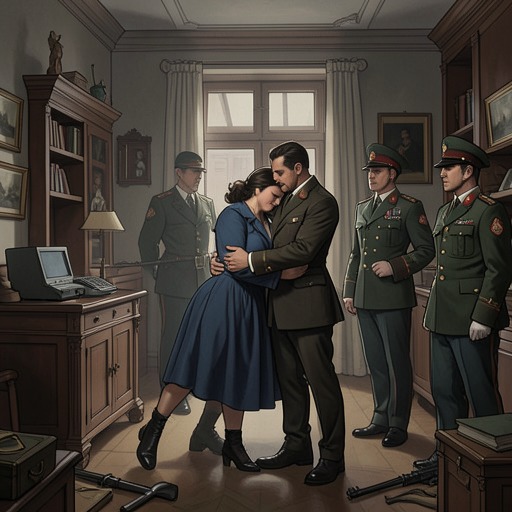
A sentry hints that the division is changing, and [Wu Dawang](entity:character-recall-character-wu-dawang-729264bc9423) sees a departing truck and signs of disorder around the barracks. The [Political Instructor](entity:character-recall-character-d8a590eed06b) welcomes him, explains that the [Division Commander](entity:character-recall-character-dbe2e8c72f13) volunteered for a pilot streamlining scheme, and says the division is to be disbanded.
During the Political Instructor’s briefing
A City Job Is Promised
The [Political Instructor](entity:character-recall-character-d8a590eed06b) explains that promotions have been suspended but that the Commander has ordered an exception for [Wu Dawang](entity:character-recall-character-wu-dawang-729264bc9423): a job in a nearby city and work for his family. Wu Dawang feels relief, believing his affair with Liu Lian has remained undiscovered and that his long-delayed goals are finally within reach.
That afternoon
The Officers’ Drinking
[Wu Dawang](entity:character-recall-character-wu-dawang-729264bc9423) asks to see his Captain and is led to the Battalion Commander’s quarters. Through a window he sees former members of the Commander’s household drinking in despair, suggesting that the restructuring has affected them personally and that his own affair may be part of a larger concealed story.
Immediately after the drinking scene
The Captain’s Warning
The Captain catches [Wu Dawang](entity:character-recall-character-wu-dawang-729264bc9423) looking through the window and orders him to say nothing about what he saw. Wu Dawang obeys without understanding the officers’ fear or the connection between the Commander’s household and the Division’s impending dissolution.
Over the following days
Departing Units
As companies are demobilized or transferred, [Wu Dawang](entity:character-recall-character-wu-dawang-729264bc9423) watches his comrades leave amid anger, broken equipment, and farewell drinking. He begins to suspect that his own affair has been choreographed as part of the restructuring, but cannot accept that his memories of Liu Lian might have been shaped by institutional interests.
During the Division’s dismantling
The Machine Gunners Leave
[Wu Dawang](entity:character-recall-character-wu-dawang-729264bc9423) visits the Machine Gunners’ abandoned barracks and finds broken training equipment, profanity on the noticeboard, and bitter verse about being carried wherever the political tide goes. His dry eyes reveal that his deepest distress is not the loss of his comrades’ futures but his ban from Liu Lian’s house.
That evening
A Hint from Management
The Head of Management tells [Wu Dawang](entity:character-recall-character-wu-dawang-729264bc9423) that he has come out better than the others thanks to Liu Lian. The remark deepens his suspicion that his city assignment and early departure are connected to her influence and to a larger plan.
Late that night
The Night Visit Stopped
Overcome by longing, [Wu Dawang](entity:character-recall-character-wu-dawang-729264bc9423) puts on his uniform and tries to go to Liu Lian’s house. The Captain catches him and reminds him that he is still in the army, that his family has been given a city future, and that a visit could ruin the arrangements.
During the same nighttime confrontation
The Captain’s Confession
The Captain admits that he alone has guessed the affair and says the Commander’s first wife had left him for a factory worker. He urges [Wu Dawang](entity:character-recall-character-wu-dawang-729264bc9423) to accept his good fortune while other soldiers face demobilization, forcing him to recognize how little he can control.
Three days after the nighttime confrontation
Formal Demobilization
[Wu Dawang](entity:character-recall-character-wu-dawang-729264bc9423) is officially told that he will be demobilized and assigned to the East is Red Tractor Factory. His superiors expedite his departure and urge him to save money for city life, presenting the decision as a reward for his service.
At Wu Dawang’s farewell meeting
The Exemplary Servant
At a company gathering, the Head of Management announces that [Wu Dawang](entity:character-recall-character-wu-dawang-729264bc9423) will receive the Third Order of Merit and the unique title of Exemplary Servant of the People. The public honor casts his private entanglement in the language of political virtue, although even his superiors had not known
After the farewell meeting
The Captain Is Also Removed
The Captain tells [Wu Dawang](entity:character-recall-character-wu-dawang-729264bc9423) that he too has received notice of demobilization. He speculates that someone spoke too freely about the Commander and his wives, suggesting that the people connected to the Commander’s household are being pushed out as the Division dissolves.
Late that night
The Final Journey Begins
[Wu Dawang](entity:character-recall-character-wu-dawang-729264bc9423)’s company gathers to see him off, and he weeps as the jeep carries him away from the barracks. The Head of Management, left behind, says he must plead with the Commander to remain in the army, revealing that the purge of the household’s former staff is not yet complete.
On the road to the station
The Political Instructor’s Plea
The [Political Instructor](entity:character-recall-character-d8a590eed06b) accompanies [Wu Dawang](entity:character-recall-character-wu-dawang-729264bc9423) to the Commander’s house and asks him to persuade Liu Lian to help save his army career. He explains that his own marriage depended on a promise to bring his wife to the city, echoing Wu Dawang’s earlier bargain and exposing the shared desperation beneath their political rhetoric.
Just before Wu Dawang’s scheduled train
Liu Lian at the Door
Liu Lian opens the door in a heavy red nightgown, looking fatigued and visibly pregnant. [Wu Dawang](entity:character-recall-character-wu-dawang-729264bc9423) is transfixed by her stomach as he tells her he is leaving; she already knows the train time, showing that his departure has been arranged in detail.
During the final farewell
The Gift of Pine Kernels
[Wu Dawang](entity:character-recall-character-wu-dawang-729264bc9423) offers Liu Lian pine kernels brought from home. She takes them upstairs, then returns with the object wrapped in red silk that he had meant to ask for: the sign that had marked their affair.
At the threshold before Wu Dawang leaves
The Sign Changes Hands
Liu Lian gives [Wu Dawang](entity:character-recall-character-wu-dawang-729264bc9423) the sign and tells him that the authorities have approved the Commander’s final report: the troops remaining in barracks will be sent home. She cannot save the [Political Instructor](entity:character-recall-character-d8a590eed06b), but promises to help him and others after their discharge.
That same night
The Last Touch
Liu Lian presses [Wu Dawang](entity:character-recall-character-wu-dawang-729264bc9423)’s hand against her swelling stomach, then urges him to leave before the Commander returns. They part without resolving whether she is pregnant or whether they will meet again, and he carries the sign away as the last tangible remainder of their private world.
Three days after the farewell
The Division Disappears
The final demobilization is announced, scattering everyone who knew about the affair and those who did not. The secret sinks from view as the Division’s restructuring and institutional forgetting erase the setting and much of the record of [Wu Dawang](entity:character-recall-character-wu-dawang-729264bc9423)’s service.
The fifteen years after the affair
Fifteen Years of Urban Life
[Wu Dawang](entity:character-recall-character-wu-dawang-729264bc9423), [Zhao Ezi](entity:character-recall-character-a513b918bbfa), and their son build a life in the city, but the memories of Liu Lian remain with him. His marriage stays emotionally distant, and he watches for news from the army and from Liu Lian without learning what became of her after the Commander returned.
Fifteen years after leaving the Division
Wu Dawang Grows Older
[Wu Dawang](entity:character-recall-character-wu-dawang-729264bc9423) has entered middle age, worn down by social change and disappointed hopes. He knows from public reports that the former [Division Commander](entity:character-recall-character-dbe2e8c72f13) has risen to provincial command, while hearsay offers only fragments about Liu Lian’s life.
A snowy winter evening, fifteen years later
The Boy on the River
[Wu Dawang](entity:character-recall-character-wu-dawang-729264bc9423) sees a teenage boy from the Commander’s compound skating on the frozen river and studies him from a distance. The sight draws him toward the provincial capital’s grand military compound, where he hopes to find Liu Lian again.
The same evening
The New Compound Gate
[Wu Dawang](entity:character-recall-character-wu-dawang-729264bc9423) observes the imposing gates and sentries outside the provincial Commander’s residence until late at night. The scale and imported stone of the compound sharply contrast with the modest military home where he once served Liu Lian.
The following morning
Wu Dawang Enters the Grounds
Using his experience of military compounds, [Wu Dawang](entity:character-recall-character-wu-dawang-729264bc9423) walks past the main sentries and reaches the gate of Number One. He tells a guard that he once served as Liu Lian’s orderly, and waits in falling snow while the guard contacts the household.
The following morning, during the visit
The Letter at the Gate
A sentry returns with a sealed note saying Liu Lian is having her hair done and cannot invite [Wu Dawang](entity:character-recall-character-wu-dawang-729264bc9423) inside. She asks him to write any request for help, including a sum and address if he wants money, reducing their reunion to a formal exchange at the gate.
At the end of the visit fifteen years later
The Sign Returned
[Wu Dawang](entity:character-recall-character-wu-dawang-729264bc9423) takes the red-silk-wrapped sign from inside his coat and asks the sentry to give it to Liu Lian. He turns away and vanishes into the snow without leaving a request, making the old sign his silent answer to her offer of money or assistance.
8 September 1944
Mao’s 1944 Speech
The novel closes with [Mao Zedong](entity:character-recall-character-mao-zedong-921152bbba4e)’s address commemorating [Zhang Side](entity:character-recall-character-zhang-side-745f1a416887), delivered to Communist Party departments and military units. The speech declares that the revolutionary forces exist to serve the people, praises the adoption of useful criticism, and insists that comrades should care for and help one another.